
FULL TITLE:
Somatotopic functional connectivity gradients in the monkey and human striatum
SPECIES:
Human, Macaque
ABSTRACT:
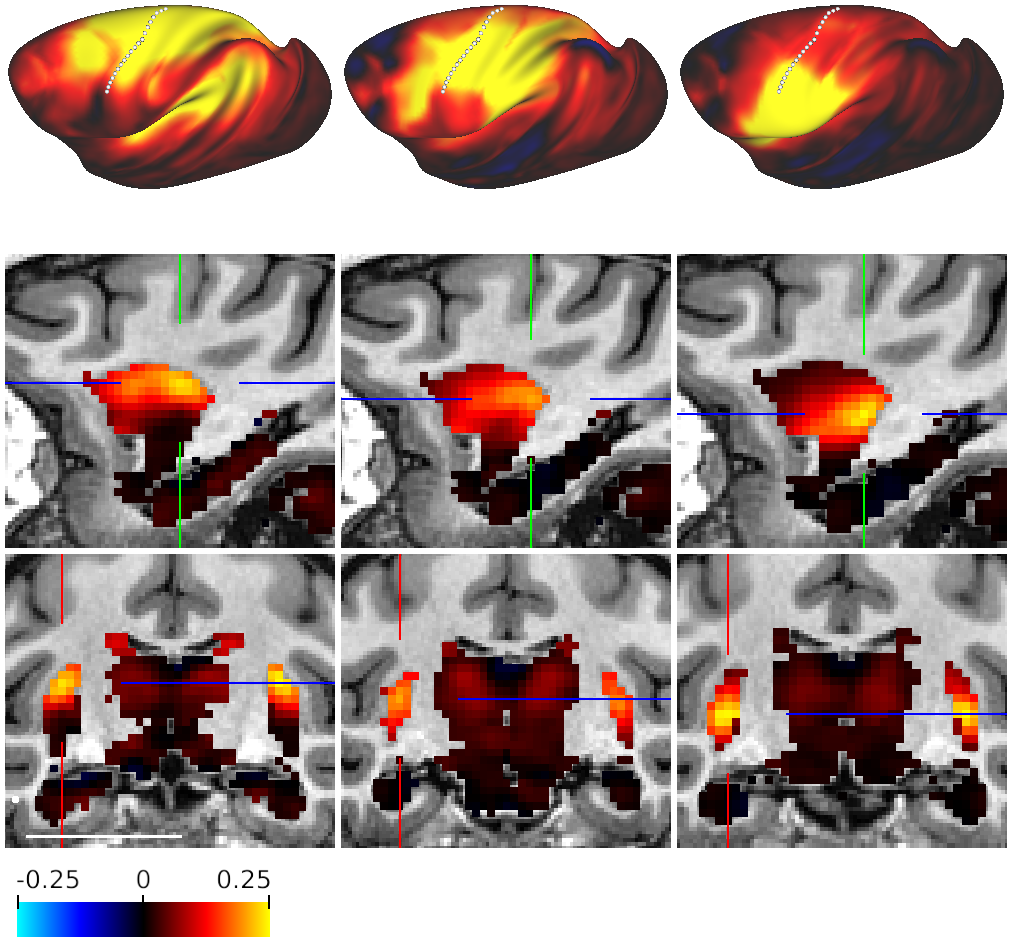
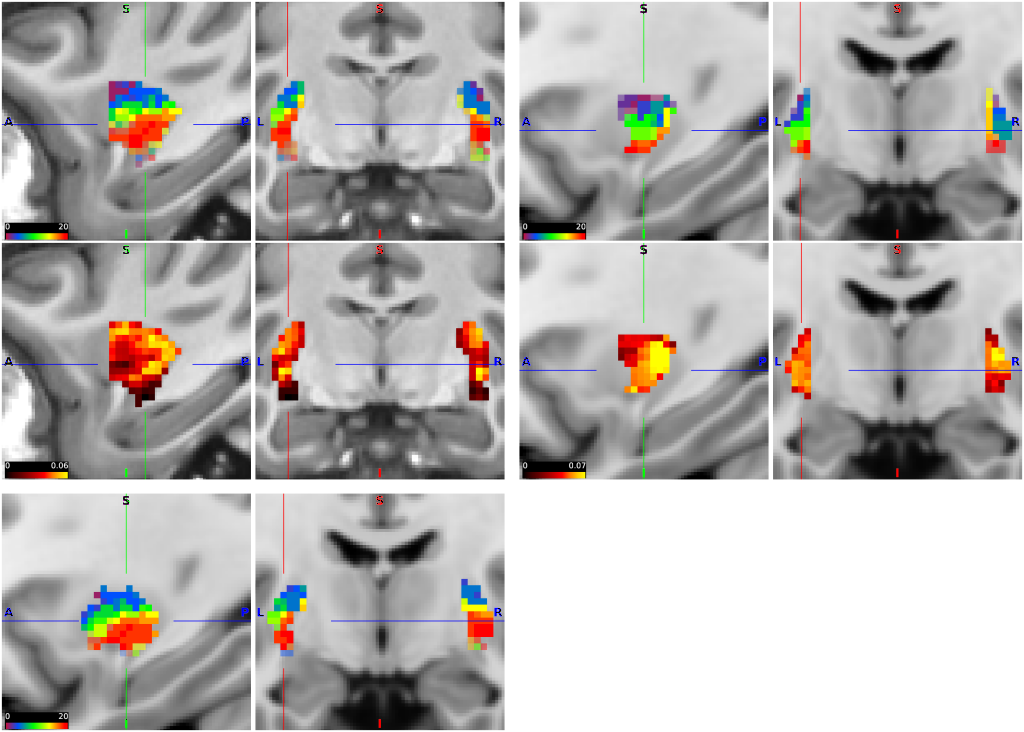
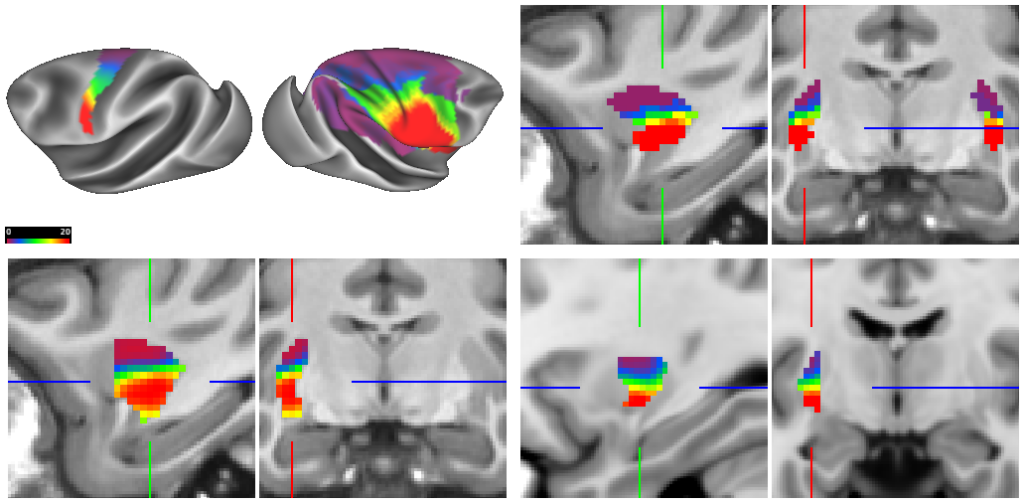
Understanding the topographic and functional organization of the striatum—a key brain structure involved in motor control, learning, and cognition—is crucial for elucidating the pathophysiology of the neurological and psychiatric disorders associated to it, and for developing targeted therapies. While recent magnetic resonance imaging (MRI) studies in humans and non-human primates have noninvasively characterized the brain-wide connectivity patterns of the striatum, its detailed somatotopic organization and the homology across species remains to be fully elucidated. We aimed to comprehensively characterize the somatotopic organization of the striatum in macaque monkeys based on functional connectivity patterns, and to assess the extent of homology or divergence of this organization between macaque monkeys and humans. Resting-state functional connectivity data were obtained from 11 anesthetized macaques using an ultra-high-field 7-tesla MRI scanner. Using two complementary approaches—seed-based analysis and connectopic mapping—we successfully delineated a distinct, regular volumetric somatotopic map within the macaque posterior putamen, a motor-related subregion of the striatum. This map exhibited a gradient encompassing the lower limb, trunk, upper limb, and face representations, predominantly oriented along the dorsal–ventral axis. The somatotopic gradient identified in macaques demonstrated a remarkable similarity with the corresponding gradient in the human posterior putamen, characterized using a publicly available resting-state functional MRI dataset. Furthermore, cross-species decoding analysis revealed that the somatotopy of the human posterior putamen could be accurately predicted using the anatomically aligned macaque somatotopic map obtained in this study as reference. In addition to this shared gradient organization, our seed-based analyses suggested non-gradient-like features in the human posterior putamen. These findings offer compelling evidence for the high evolutionary conservation of the major topographic organization in the primate posterior putamen, while pointing to species-specific divergence.
PUBLICATION:
Imaging Neuroscience
- DOI:
10.1162/IMAG.a.1421
- Naokazu Goda
- Satomi Chiken
- Daisuke Koketsu
- Atsushi Nambu
- Masaki Fukunaga
- National Institute for Physiological Sciences, Okazaki, JP