
FULL TITLE:
HCP-D T1w/T2w Longitudinal Dev - Age and Puberty
SPECIES:
Human
ABSTRACT:
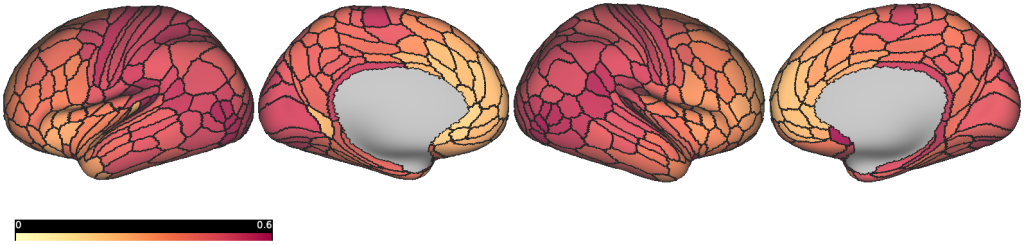
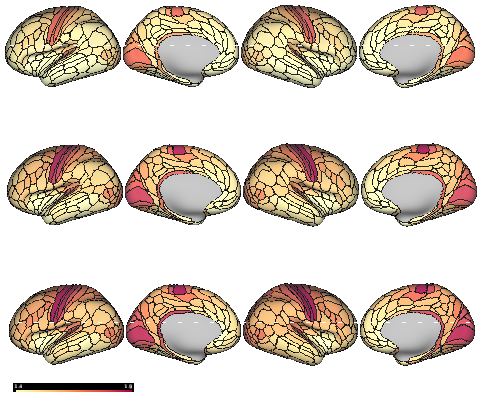
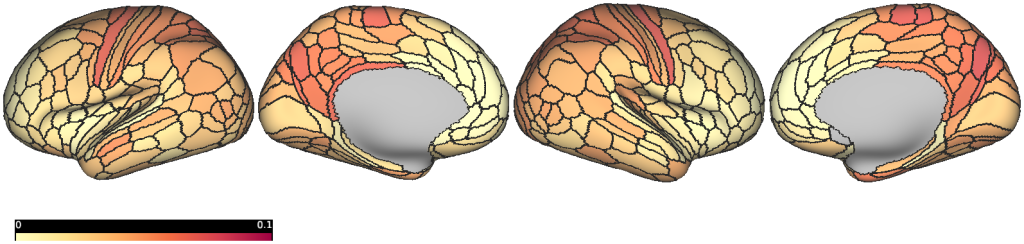
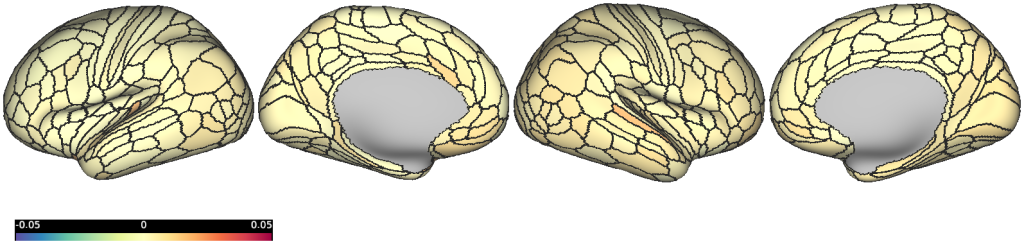
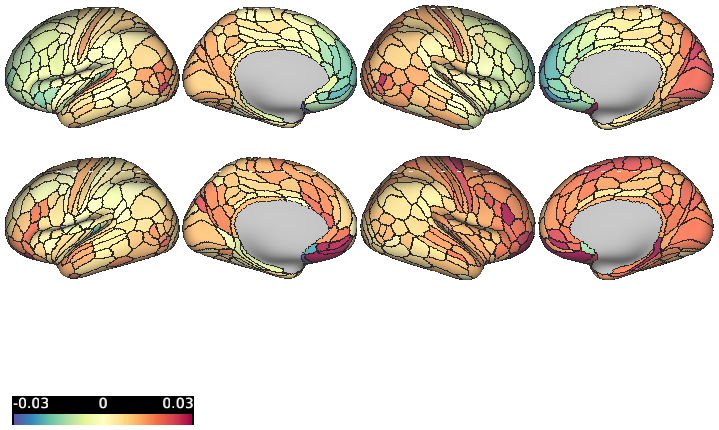
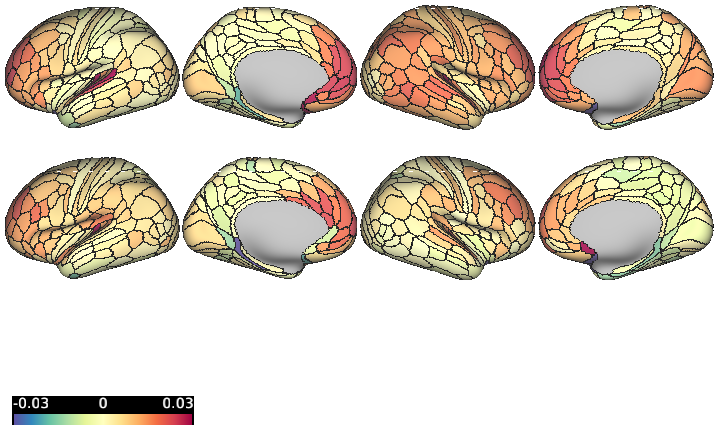
Puberty may regulate changes in sensitive period plasticity during adolescence. Experience-dependent myelination is a mechanism that may underlie such changes in plasticity. Intracortical myelin can be indirectly indexed by the ratio of T1-weighted to T2-weighted MRI images (T1w/T2w). While age-related T1w/T2w changes have been documented, less is known about the contributions of pubertal timing (being earlier/later relative to peers). Using Bayesian hierarchical generalized additive models with longitudinal data from 9- to 18-year-olds in the Human Connectome Project in Development, we examined how age and pubertal timing relate to T1w/T2w. Results confirmed that age-related change is patterned along the sensorimotor-association axis, though longitudinal effects were smaller than prior cross-sectional estimates. Early pubertal timing was linked to greater T1w/T2w in sensorimotor regions and lower T1w/T2w in association areas (especially dorsolateral and frontopolar cortices), but only in females. In contrast, late puberty was linked to higher T1w/T2w in association areas in both sexes and reduced T1w/T2w in several mid-ranking parcels. These results indicate modest, potentially sex- and regionally-specific effects of pubertal timing on T1w/T2w. Future work should replicate these effects and investigate associations with cognitive and psychosocial development.
PUBLICATION:
PsyArXiv
- DOI:
10.31234/osf.io/6pksu_v1
- Theresa W. Cheng
- Patrick Mair
- Mark T. Curtis
- Graham L. Baum
- John C. Flournoy
- Shuyao Wang
- Matthew F. Glasser
- Deanna M. Barch
- Leah H. Somerville
- Harvard University
- Washington University in St. Louis