
FULL TITLE:
A Public Dataset for Automatic Segmentation of the Cranial Nerve II from Multimodal MRI
SPECIES:
Human
DESCRIPTION:
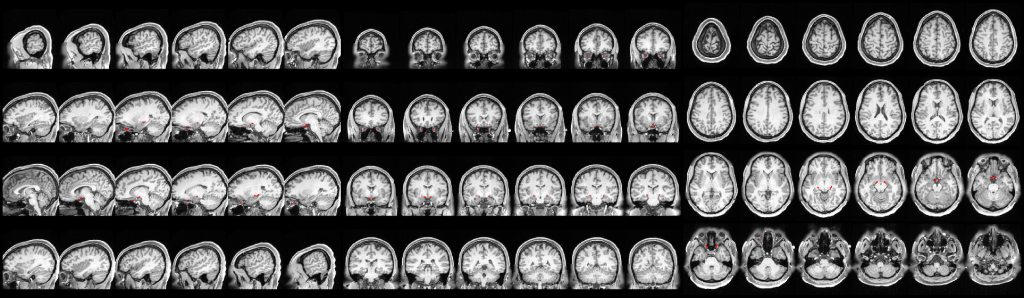
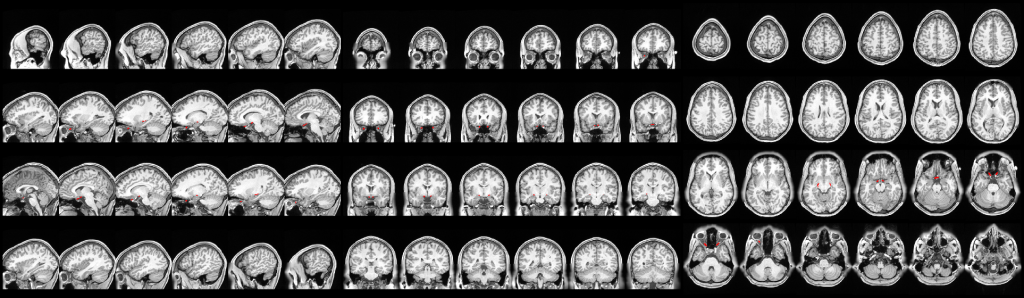
OpticNerveSeg is the first large-scale, publicly available dataset for cranial nerve II (optic nerve) segmentation from multimodal MRI. The dataset comprises 151 subjects from the Human Connectome Project (HCP) Young Adult cohort, including high-quality binary segmentation masks of cranial nerve II (optic nerve, optic chiasm, and optic tracts).
For convenience, pre-configured wb_view scene files are provided for two example subjects (973770 and 102816). These scene files can be found at the top level of the download directory. Scene files for the remaining subjects can be easily generated by loading the provided segmentation masks into wb_view.
ABSTRACT:
The cranial nerve II is critical to the visual system, and accurate segmentation from multimodal MRI is essential for neurosurgical planning, radiotherapy targeting, and disease monitoring. However, manual annotation of cranial nerve II structures is labor-intensive, time-consuming, and prone to inter-observer variability, which limits the construction of large-scale datasets and hinders the development of robust automatic segmentation methods. To address this challenge, we introduce OpticNerveSeg, to our knowledge, the first large-scale public dataset dedicated to the segmentation of cranial nerve II. The dataset includes 151 subjects from the WU-Minn Human Connectome Project (HCP), with binary masks of the optic nerves, optic chiasm, and optic tracts. Annotations were generated using a human-in-the-loop pipeline integrating expert tractography (18 subjects), semi-supervised label propagation (102 subjects), and model inference across all subjects, followed by expert correction of 20 cases. This strategy reduced annotation time by 76% compared to fully manual delineation. OpticNerveSeg establishes a standardized benchmark to accelerate the development of effective automatic cranial nerve segmentation methods.
PUBLICATION:
Scientific Data - Springer Nature
- DOI:
10.57760/sciencedb.29570
- Alou Diakite
- Cheng Li
- Shoujun Yu
- Lei Xie
- Yuanjing Feng
- Juan Zou
- Shanshan Wang
- Shenzhen Institutes of Advanced Technology, Chinese Academy of Sciences, Shenzhen, China
- University of Chinese Academy of Sciences, Beijing, China
- Changsha University of Science and Technology, Changsha, China
- Zhejiang University of Technology, Hangzhou, China